
This garden is almost as old as the city of Adelaide.
Visit us at maedunbroc.com.
We are now on Substack.
Visit us on Pinterest.
Music by Jason Shaw at AudionautiX
Find your next favorite book at Bookshop (and help out our show, too!).
Featured image courtesy of Adelaide Botanic Garden
Transcript:
Hey there, Garden Lovers.
Today is January 17, and this is a A Garden a Day with Mædunbroc Gardens.
Step back in time with me . . . to 1857. It was in that year that nine innings was decided to be the length of a baseball game. Elisha Otis installed the first elevator in New York City. Gustave Flaubert’s first novel, Madame Bovary, was published, and today’s garden opened to the public.
Today, we are in Adelaide, Australia at the Adelaide Botanic Garden.
Work began on the garden in 1855, but the plan for the garden began in 1836 at the founding of the city of Adelaide. Other sites had been proposed and even a few attempts had been made at establishing a botanical garden, but it wasn’t until 1854 that the present site was chosen after being suggested by members of the South Australian Agricultural and Horticultural Society and George William Francis, an English horticulturalist and science writer who had migrated to South Australia in 1849.
Francis went on to become the first superintendent of the Adelaide Botanic Garden in 1855 when work began. He was instrumental in completing the first stages of land management and garden design. He established the perimeter of the garden, landscaped the entrance to the garden, and suggested Regent’s Park in London as inspiration for landscape and garden development for Adelaide Botanic Garden.
In 1860, the Botanic Garden Act established a Board of Governors for the garden with George William Francis as its first Director. There have been ten directors of the garden since its opening.
Today, this 130-acre garden boasts several historic buildings and, of course, many beautiful plant displays.
The Victorian-era Palm House or Tropical House is a glasshouse that was imported from Germany in 1875. It opened to the public in 1877 and has seen two renovations — once in 1995 and again in 2018. The glasshouse originally was used to house tropical plants but has been transformed into a home for plants from Madagascar.
A small, square building known as the Deadhouse was built in 1882 as part of the Adelaide Lunatic Asylum. The asylum ceased operation in 1902, and the land was acquired by the botanic garden. Only this small building remains of the asylum. It has been used as a toolshed and occasionally as a gallery for art exhibitions.
The Museum of Economic Botany was established by the second director of the garden, Moritz Richard Schomburgk in 1879 and opened in 1881. The museum is dedicated to the study of useful plants and displays specimens and models showing how plants have been used in the past and how they continue to be used today.
On display are papier-mâché models of fruit and fungi created in the 1800s.
Stunning architecture is not saved for historic buildings at the Adelaide Botanic Garden. The Amazon Waterlily Pavilion is a glass palace built in 2007. This energy-efficient glasshouse’s design was inspired by the leaves of the waterlily and houses the pond built in 1868 as the home of the Amazon waterlily, or Victoria amazonica, which is found in the wild in South America’s Amazon river.
Another newer building is the Bicentennial Conservatory built in 1989. Designed by South Australian architect Guy Maron, the conservatory is the largest single span conservatory in the southern hemisphere. This steel and glass building houses lowland rainforest plants from Northern Australia, Papua New Guinea, Indonesia, and Pacific Islands. Many of the plants in the collection are considered at risk or endangered in their native habitats.
Adelaide Botanic Garden is home to the National Rose Trial Garden. Begun in 1996, the rose garden is the first of its kind in Australia with the sole purpose of growing and testing roses for their suitability in the Australian climate.
The trial garden is not the only rose garden at Adelaide. The International Rose garden displays more than 2,700 roses and more than 350 rose cultivars along with mixed companion plants providing vibrant color.
I mentioned the Museum of Economic Botany earlier in this episode. The botanic garden also offers an Economic Garden. The garden demonstrates useful plants in their natural growing form before they are harvested and transformed into fibers, spices, and such.
Adelaide Botanic Garden also maintains the Garden of Health, dedicated to growing plants that heal and promote health and wellness. The Garden of Health is divided into two sections. The northern side is the Garden of Contemplation and encourages wellbeing and reflection. The southern side is the Garden of Healing and focuses on disease prevention and treatment of illness.
The Botanic garden is also home to First Creek Wetland, which shows not only the importance of a wetlands eco-system, but was also designed to collect and recover stormwater to assist with watering the botanic garden. This plan for sustainability was to recover enough water from the aquifer to provide all the water needed to water the botanic garden by 2022, and I do believe they met their goal. More information on how this works can be found on the Adelaide Botanic Garden website. I’ve include a link in the notes.
Trees play a magnificent role in the botanic garden. The Australian Forest and Ficus Avenue offer shade for a casual stroll to enjoy the diverse collection of trees and plants as well as the 150-year-old Moreton Bay Fig trees.
Plants native to Australia are the focus in the Australian Native Garden, the Mallee Section, and Threatened Plant Seed Orchard. The native garden focuses on artistic and innovative ways to grow natives at home as edging, hedges, formal and informal beds. Care is taken to show how plantings can be water-wise and grown without the need of synthetic pest control or fertilizer.
The Threatened Plant Seed Orchard is a fairly new addition to the garden. Opened in October 2022, the purpose is to protect threatened plant species and preserve seeds for the future.
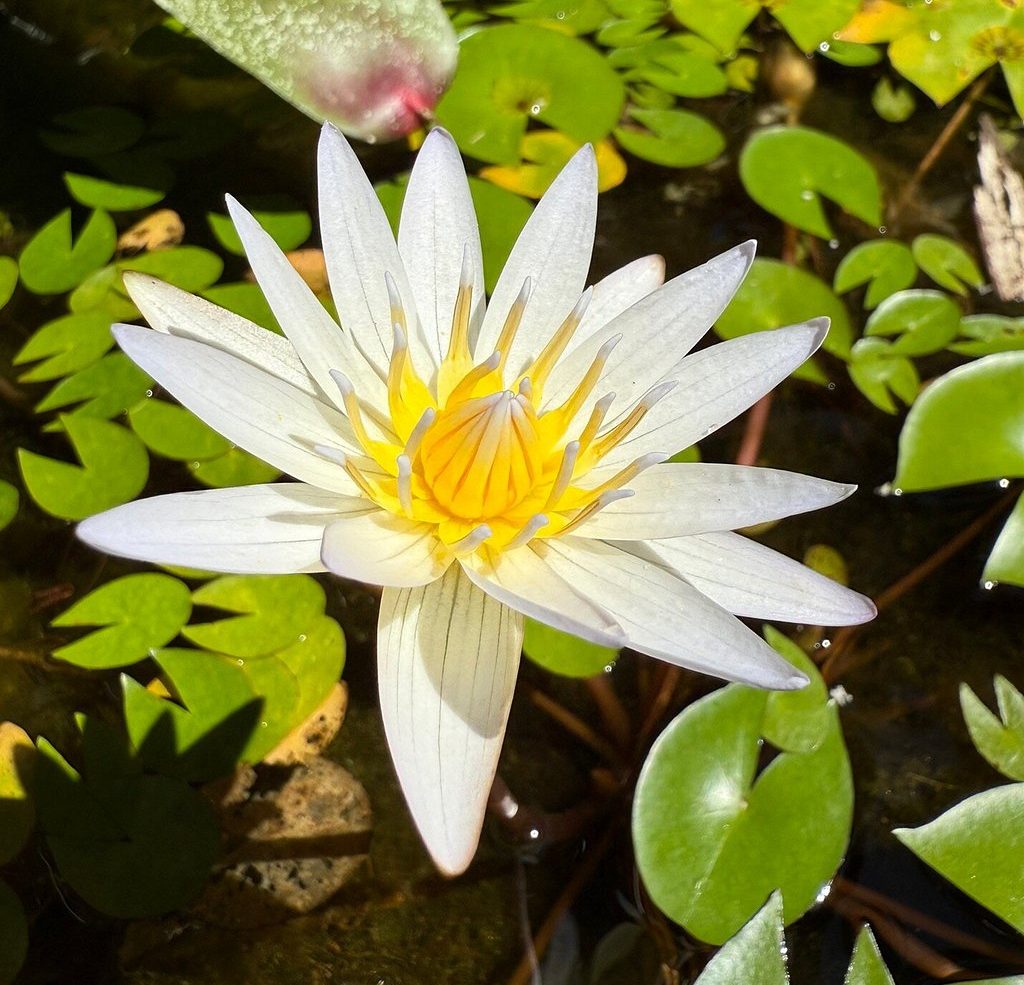
Colorful blooms can be found throughout the botanic garden but especially in the Nelumbo Pond in late-December and January when bright pink lotus blossoms fill the pond. Wisteria delights the senses in mid-September and October as they wind around arbors on either side of the Mediterranean Garden, and dahlias show off their colors in summer in the Dahlia Garden.
And finally, the Kitchen Garden, a garden designed for children, shows visitors where their food comes from. With odd-shaped beds and sawdust covered paths, children can explore the garden to find bee houses, climbing plants, fruit trees, and fruits and vegetables growing in season.
The Garden also offers the Little Sprouts Kitchen Garden educational program.
There are many things to learn and see and do at Adelaide Botanic Garden. I do hope if you are in the area, you stop by and enjoy some time in nature.
Well, that’s about it for today. I hope you enjoyed this episode. Join me tomorrow to see where we are going next.
If you like A Garden a Day, please considering liking, following, or subscribing to the podcast. It lets you know when a new episode is available, and it lets me know you like the show. Also, if you are able, please consider giving the show a five star review. It helps others find the show. It really does help. Thank you so much.
You can leave a comment for me on this episode’s page at maedunbroc.com.
If all goes well, I’ll be right back here tomorrow. See you then.
To learn more about Adelaide Botanical Garden, check out these links:

Leave a Reply