
We explore the Caribbean’s largest botanical garden in this episode.
Visit us at maedunbroc.com
Music by Jason Shaw at AudionautiX
To find your next favorite book, visit our Bookshop.
Featured image courtesy of TripAdvisor
Transcript:
Hello Listeners,
Today is February 27, and this is A Garden A Day with Mædunbroc Gardens.
Thank you for listening.
The mission for today’s garden is “To create a better society by providing a sustainable, safe and accessible green space for celebration, education, passive recreation, research and the creation of fond memories.”
That sounds like a pretty good mission to have.
Today, we are exploring Hope Gardens, also known as Royal Botanical Gardens, Jamaica located in Kingston, Jamaica.
Spanning 237 acres, Hope Gardens is the largest botanical garden in the Caribbean and the largest public green space in the Kingston Metropolitan area.
The garden was created in 1881 when the Jamaican government purchased 200 acres of the Hope Estate to establish an experimental garden. They dedicated fifty acres to growing various varieties of sugar cane and ten acres to growing coffee, cocoa, teak, and pineapples. The rest of the property was transformed into a pleasure garden for the people of Jamaica.
The Hope Estate once belonged to one of the original English colonizers – Major Richard Hope, commander of the British army. He was given land as a reward for his role in taking Jamaica from the Spanish in 1655. He developed the estate into a sugar plantation.
If you’ve been listening to all of our episodes this year, you might recognize a theme of Caribbean islands and sugar plantations. I’ve lost track. Is this the fourth sugar plantation? The fifth?
Anyway, Richard Hope’s only child, Anna Eliza, married Roger Elletson. Their eldest son, Thomas, inherited the Hope Estate and had an aqueduct constructed between the years 1752 and 1758. The aqueduct supplied water from the Hope River to his water mill on the estate to grind sugar.
The aqueduct stills stands and was designated a national monument by the Jamaica National Heritage Trust in 2005.
In 1953, Queen Elizabeth, II, visited Hope Gardens on a visit to Jamaica and was impressed by the gardens. She gave the garden the “royal” designation changing its name to The Hope Royal Botanic Gardens.
Hope Gardens encompasses a variety of themed gardens, including a Sunken Garden, a Cactus Garden, and and Orchid House.
Several areas in the garden are available for rent for weddings and special events, and each area includes a pavilion or gazebo and a dedicated garden for the space.
There are also single plant garden spaces including the Palm Avenue and the Bougainvillea Walk that erupts with an explosion of tropical colors.
Eleven acres of Hope Gardens are dedicated to the Chinese Garden. The garden was given as a gift to Jamaica from the Chinese government marking forty-three years of diplomatic relations between the two governments.
Poet’s Corner is a quiet tucked away space launched in 1953 to honor Jamaica’s poets and literary scholars. The space includes a large alabaster stone with names of Jamaica’s most celebrated poets carved on it.
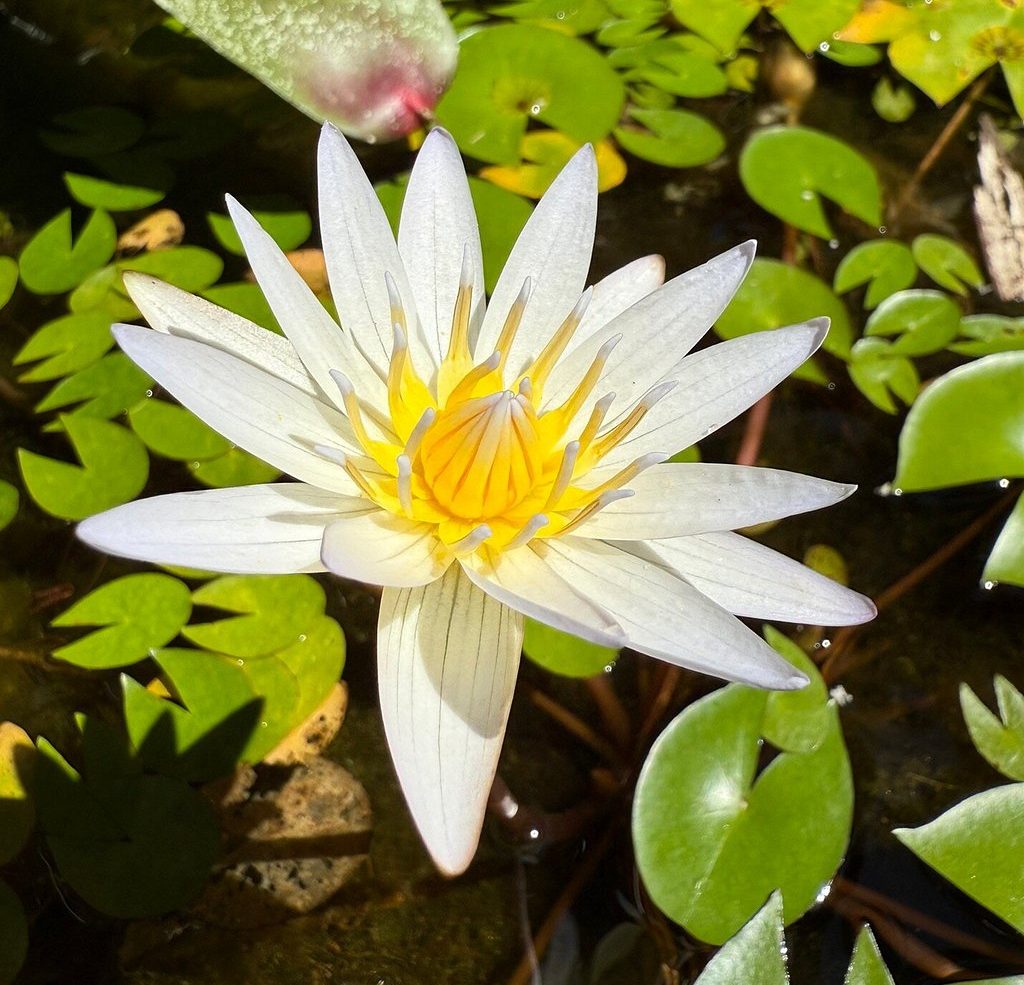
At the north end of the garden is a lake with waterlilies.
The garden boasts a variety of plants both native and exotic including the hibiscus elatus or blue mahoe — the national tree of Jamaica and the Talipot Palm Tree also known as the Century palm (Corypha umbraculifera). The Talipot Palm takes fifty to eighty years to reach its mature ninety to 100 feet in height, and when it does, it blooms once and dies.
Many of the heritage plants in the garden arrived on the estate from a French ship that was captured on its way from Mauritius to Hispaniola in 1782. How exactly the plants found their way to the Hope Estate is not entirely known, but the Receiver General at the time, Hinton East, owned an estate near Hope Estate.
Cargo entering the country — even from a captured ship — was required to pass through Mr. East’s office, so there is a good chance we could connect the dots from ship to East to Hope.
The garden operates a plant nursery on site where they grow 1,000 different plant species including twenty-five that are endemic to Jamaica.
In addition to enjoying the plants in the garden, visitors will enjoy live music at the small amphitheater called the Shell Bandstand and visiting the animals in the small zoo on site.
Hope Gardens provides an excellent day out for nature walks, picnics, or spending time with the family.
The garden is open every day of the week from 6:00am to 6:00pm.
I do hope you’ve enjoyed this episode. That’s about it for today. Join me here tomorrow to find out where we are going next.
As a reminder, I release a new episode every single day. You can find past episodes anywhere you listen to podcasts or you can find them at our website — agardenaday.com.
Thanks for listening. If all goes well, I’ll be right back here tomorrow. See you then!
To learn more about Hope Gardens, check out these links:
https://www.visitjamaica.com/listing/hope-botanical-gardens/432/
https://www.ksamc.gov.jm/attractions/hope-botanical-gardens
https://en.wikipedia.org/wiki/Hope_Botanical_Gardens
http://www.jnht.com/site_hope_botanical_garden.php
https://things-to-do-in-jamaica.com/hope-botanical-gardens/
https://www.jamaicaobserver.com/2024/06/09/hope-royal-botanical-gardens-natural-place/
https://connectingjamaica.com/directory/royal-botanical-gardens-hope-gardens/
http://www.jnht.com/site_hope_aqueduct.php


Leave a Reply