
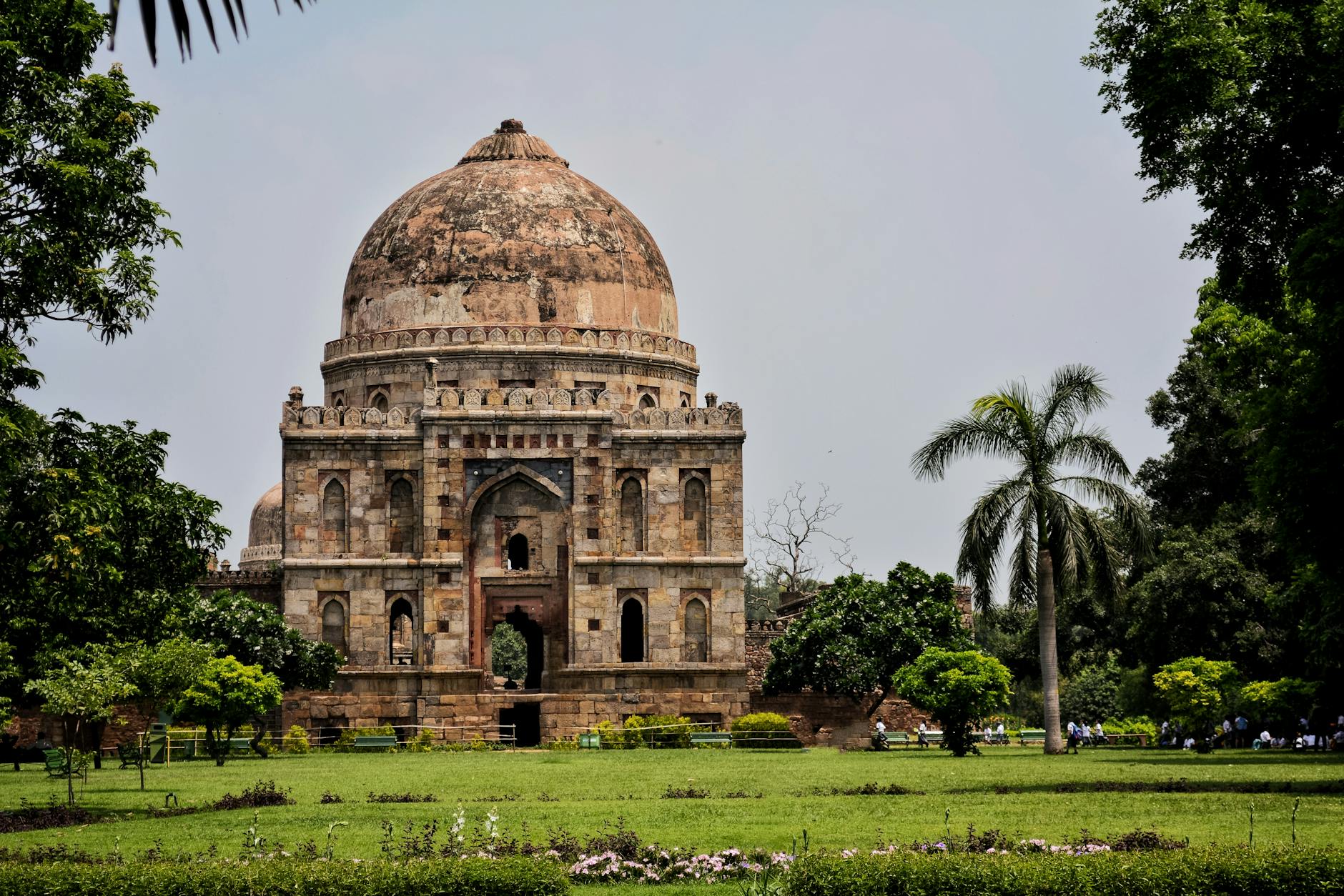
Historic architecture and plants combine to create this stunning garden.
Visit us at maedunbroc.com
Music by Jason Shaw at AudionautiX
Find your next favorite book at our Bookshop storefront.
Featured image courtesy of Pexels.
Transcript:
Hello Listeners,
Today is January 10, and this is A Garden a Day with Mædunbroc Gardens.
Gardens are all about the plants, of course, but what makes a garden unique, what makes a garden interesting, what makes a garden a place to go back to again and again is so much more than just the plants.
It’s also everything else that makes up the garden. It’s the architecture of the structures in the garden. It’s the statues or art in the garden. It’s the garden paths. It’s the shade that some of these things provide, and it’s also the light as it shines on some objects but not others. It’s the sounds in the garden — and also the sounds that are missing. It’s the scents, the visual textures, the seating. It’s water or the lack of it. Vibrant colors or shades of green. It’s the surprises, but also the familiar. It’s each individual part but also the whole.
Some gardens can sometimes seem rather mundane, but when a garden is done well, it’s a work of art.
Today’s garden is an example of how architecture — the beauty of the built world — combines with the beauty of nature to elevate a seemingly ordinary city park into an extraordinary garden.
Today, we are going to Lodhi Garden in New Delhi, India.
The garden you can visit today began in 1936 as Lady Willingdon Park, named for the person who designed the gardens in the park. She was the wife of the Governor General of India, the Marquess of Willingdon.
The park was renamed Lodhi Garden in 1947, when India gained independence from the British. The name Lodhi refers to the Lodi Dynasty of rulers of India from the fifteenth century and reflects the history of some of the architecture on site.
There are several stunning monuments and tombs in this 90 acre park. The oldest structure is a turret that might have been part of a fortified wall from the Tughlaq Dynasty, the third Muslim dynasty to rule over the Delhi Sultanate between the years 1320 and 1413. The wall no longer stands and little is known about the turret that remains.
The Sayyid Dynasty took over the reign of the Delhi Sultanate in 1414 followed by the Lodi Dynasty in 1451. The area of today’s garden was used as a royal burial ground for both of those dynasties, and today, visitors to the garden can see a stunning combination of both Islamic and Indian architecture of the fourteenth, fifteenth, and sixteenth centuries. The intricate designs and details are breathtaking combined with the serenity and beauty of the natural spaces surrounding the buildings and monuments.
The oldest tomb in the garden belongs to Sultan Muhammed Shah Sayyid, who died in 1444. The tomb was constructed in that same year at the order of his son and is the only remnant of the Sayyid Dynasty in the garden.
Most of the monuments in the garden were built during the reign of Sikandar Lodi from 1489 to 1517. These include the Bara Gumbad, a group of monuments which includes a mosque, a guesthouse of Sikandar Lodhi, and a large domed structure that is believed to have been the entrance to larger structure that is no longer standing.
Another monument is the Shish Gumbad, a glazed, mirrored dome with enameled blue tiles. Only a few of the blue tiles remain in traces. Originally, the tiles shone like glass, giving the structure its name. The ceiling of the structure is plaster and contains inscriptions from the Quran as well as floral motifs.
The tomb of Sikandar Lodi who died in 1517 is also located there. The tomb was constructed that same year and is considered the first garden tomb in India.
After the Lodi Dynasty came to an end, the Mughal Empire established rule in India.
There is ONE structure that remains in Lodhi garden from the Mughal Empire — an arched stone bridge built during the reign of Emperor Akbar between 1556 and 1605. If you check the links in the notes, you will see pictures of this bridge as well as the tombs and other stunning buildings in the garden.
A considerable redesign of the garden began in 1968 by American architect Joseph Stein. As part of the refresh, a glass house was built which still stands in the garden today. There are actually two glasshouses at Lodhi Garden— one for growing cacti and succulents, the other for growing ferns and a variety of other plants.
Amid the ancient buildings and monuments are also ancient trees. The garden includes over 200 varieties of trees with some trees dating back centuries. In addition to trees, both native and introduced, the garden includes many palms and brightly blooming flowering plants that provide changing colors with the seasons.
Lodhi Garden also boasts the National Bonsai Park, a large lake which attracts migratory birds, a rose garden, and a diverse range of other plantings that create and promote biodiversity in the garden.
It is common to see butterflies, dragonflies, numerous birds, and small mammals flitting and frolicking about the garden.
The garden blends lush greenery and manicured lawns which make this a popular spot for joggers, walkers, and yoga aficionados.
You shouldn’t be surprised to find families enjoying a picnic lunch on the lawn, couples strolling along the garden paths, or local musicians gathering for an impromptu concert.
The garden is also a popular spot for birdwatchers, artists, especially photographers, and locals eager to escape the noise of the city.
Music and art events are hosted in the garden, usually in the winter months. Education programs on biodiversity are also held in the garden to promote efforts for maintaining a healthy living environment in the garden.
Lodhi garden is free to enter. The best times to visit are late autumn to early spring when the temperatures tend to lean toward mild.
The site is protected by the Archaeological Survey of India. Restoration efforts for the monuments and structures are ongoing.
That’s it for today. Thank you for listening.
Join me tomorrow to find out where in the world we are going next.
I hope you like the show. If you do, please consider liking, subscribing, and telling your friends. Just as I like to see gardens grow, I’d like to see this podcast grow. You can help with that by leaving a five-star review where you listen to this podcast. I really do appreciate it.
If all goes well, I’ll be right back here tomorrow. See you then!
To learn more about Lodhi Garden or plan your visit, check out these links:
https://www.lodhigarden.com/
https://en.wikipedia.org/wiki/Lodi_Gardens
https://delhitourism.travel/lodi-gardens-delhi#google_vignette
https://www.tripsavvy.com/lodhi-garden-the-complete-guide-4588508
https://suzannewandersdelhi.com/lodhi-garden-a-local-guide/
https://wanderon.in/blogs/lodhi-garden-in-delhi
https://www.mapsofindia.com/delhi/places-of-interest/gardens/lodhi-garden.html
http://indianbonsaiassociation.in/


Leave a Reply