
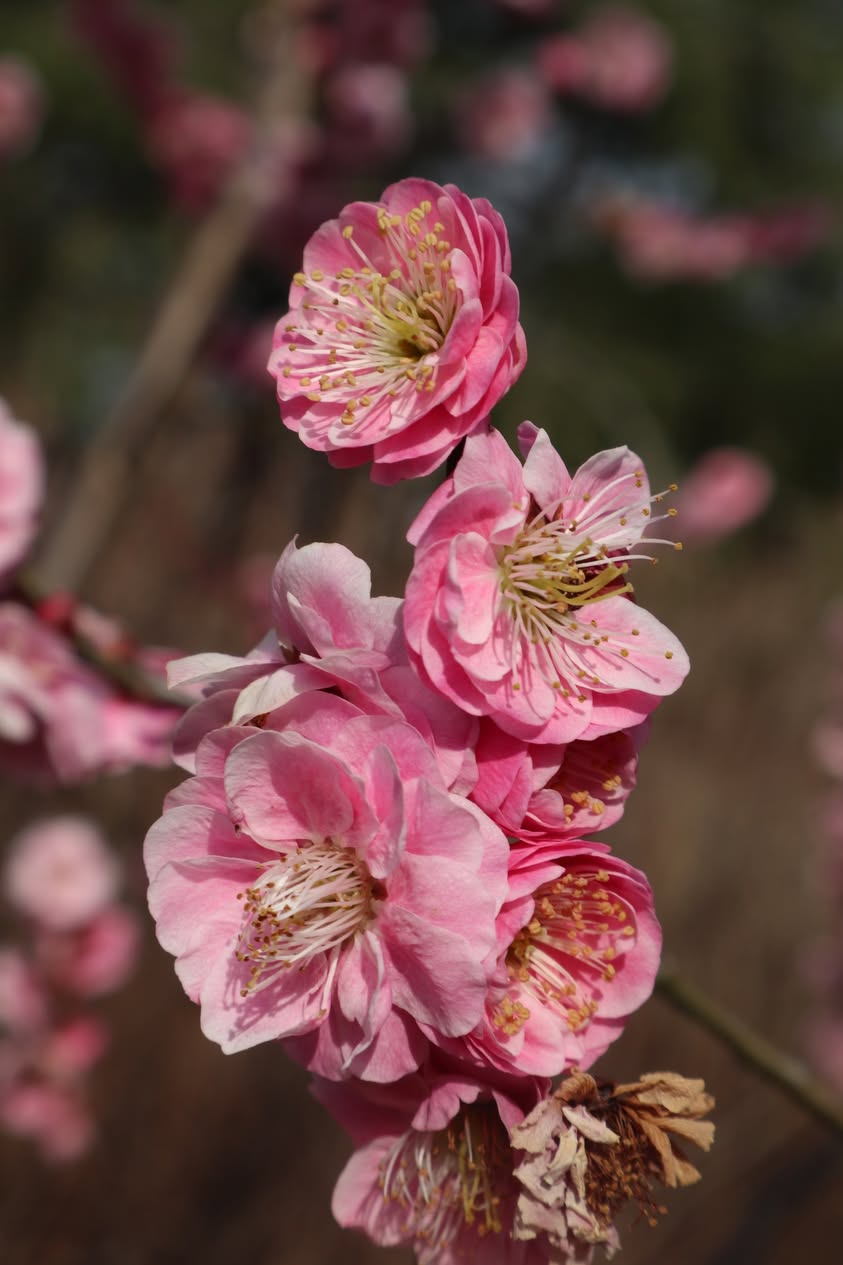
We explore the largest botanical garden in Virginia in this episode.
Visit us at maedunbroc.com.
Visit us on Pinterest .
Music by Jason Shaw at AudionautiX
To find your next favorite book, visit our Bookshop.
Featured image courtesy of Norfolk Botanical Garden.
Transcript:
We’re in Virginia again today. Two days in a row! Why? Because spring is springing. That’s why!
And because today’s garden is celebrating Daffodil Daze. So, where are we? Today, we are exploring Norfolk Botanical Garden in Norfolk, Virginia.
Hello Listeners,
Today is March 16, and this is A Garden a Day with Mædunbroc Gardens. Thank you for listening.
March is peak month for daffodils, but for Norfolk Botanical Garden, it all started with azaleas, and the address for the garden — 6700 Azalea Garden Road — pays homage to its beginning.
Also, to add to our unintended themes list, this garden started during the Great Depression.
Two men — horticulturist Frederic Heutte and Norfolk City Manager Thomas P. Thompson — began this growing project that would eventually become today’s Norfolk Botanical Garden.
Frederic Heutte was born in Paris in 1899 and moved to the United States when he was thirteen. He began working in a florist when he was a teenager until he joined the army at age seventeen and was sent to Panama to defend the Panama Canal during World War I. After the war, he began working as a gardener and made his way down to Norfolk in 1937 as head of the Norfolk Parks.
Heutte was convinced that the climate in the Hampton Roads area was perfect for azaleas, and he and Thomas Thompson, who was the city manager, asked for and received land to beautify Norfolk. In 1938, they were granted seventy-five acres of high, wooded ground and seventy-five acres of the Little Creek Reservoir to establish a city azalea garden.
That same year, they received a Works Progress Administration grant for $76,278 for the azalea garden project.
As part of the program, they were able to hire 200 women and twenty men at twenty-five cents an hour to clear brush and plant azaleas.
They worked from dawn until dusk clearing undergrowth and dense vegetation and moved 150 truckloads of dirt — by hand — for twenty-five cents an hour. Shew.
By March of 1939 — less than a year after the project started, they had planted 4,000 azaleas, 2,000 rhododendrons, several thousand other shrubs and trees, and 100 bushels of daffodils.
At twenty-five cents an hour. Oh my.
Five months later, Congressman and future Governor Colgate Darden, Jr. secured an addition $138,553 for the azalea garden. The Old Dominion Horticultural Society was formed to provide volunteer assistance to maintain the garden.
Within two years, an additional 1,000 azaleas were planted and seventy-five acres — or half of the original land given for the project — had been landscaped and included five miles of walking trails.
In 1952, the garden began hosting a yearly azalea festival to highlight Norfolk’s beautiful springtime blooms.
In 1953, the North Atlantic Treaty Organization or NATO, established a North American command center in Norfolk. Wanting to stand out from other azalea festivals in other southern states, city officials decided to align the azalea festival with NATO and changed the name to the International Azalea Festival which served the purpose to salute allied forces and highlight the beauty of the city parks. The name changed in 2009 to the Norfolk NATO Festival, and the festival is still held each spring. This year’s festival will be held on April 26.
The garden was called aptly the Azalea Garden until 1955 when the name was changed to Norfolk Municipal Gardens. In 1958, the Old Dominion Horticultural Society officially took over the management of the garden and changed the name to Norfolk Botanical Garden.
In the 1950s and ‘60s, attention was given to expanding the types of plants and garden areas within the garden. Waterways were added to allow visitors to enjoy the garden by boat.
Today, the Norfolk Botanical Garden is Virginia’s largest botanical garden, and it is powered by 100% renewable energy. The garden spans 175 acres with sixty unique gardens that can be enjoyed with a guide by tram or boat, or solo by foot.
The botanical garden is divided into three or four sections depending on the way you look at it. On either end are Gardens for Exploration. On one end is the Enchanted Garden, a wooded area of mature oak, hickory and pine with walking trails. On the opposite end is Mirror Lake and the WPA Memorial Garden, the oldest parts of the garden. There are woodland trails bordered by native orchids, ferns, and other woodland plants and of course, azaleas. The entirety of the Gardens for Exploration make for wonderful spots for hiking, bird watching or simply enjoying nature.
Between those two areas are Gardens for Learning and Gardens for Display. The Gardens for Learning area includes the children’s garden, kitchen garden, butterfly house and garden, native plant garden, wildflower meadow, and grain and hop garden.
The Gardens for Display include the rose garden, Japanese garden, sculpture gallery, colonial garden, hydrangea garden, perennial garden, and camellia garden.
This spring, a new area of the garden is planned to open — Gardens of Tomorrow. The new area will include a 26,000 square foot conservatory of the world’s rarest and most threatened plants.
The garden’s website includes a section of What’s Blooming Now, and what’s blooming now are the daffodils. The Norfolk Botanical Garden is celebrating Daffodil Daze right now with more than 400,000 daffodils showing off their vibrant colors.
Also blooming now are camellias, viburnum, magnolia, and cherry.
The Norfolk Botanical Garden offers many educational programs throughout the year for adults and children. There is always something to see and do at Norfolk Botanical Garden.
The garden is open from 9:00 to 5:00 daily.
I want to mention one other Virginia daffodil tradition before we go — the Gloucester Daffodil Festival.
Daffodils have been growing in this Tidewater region since the 1600s, and production — the growing and selling of daffodils — hit its peak in the 1930s and ‘40s, garnering Gloucester the nickname the Daffodil Capital of the America.
Gloucester is about fifty miles north of Norfolk. It takes a little more than an hour to make the drive, and each year, the town hosts the Gloucester Daffodil Festival. This year, the festival occurs on April 5th and 6th on Gloucester’s Main Street.
Well, that’s about it for today’s visit.
Thank you for listening. I do hope you’ve enjoyed this garden visit.
As a reminder, I release a new episode every single day.
If you’ve enjoyed this episode, please leave a five star review. And if you haven’t done so already, I invite you to like, subscribe, or follow, so you always get notified when I publish something new. I really do appreciate your support. It means a lot.
If all goes well, I’ll be right back here tomorrow. See you then!
To learn more about Norfolk Botanical Garden and plan your visit, check out these links:
https://norfolkbotanicalgarden.org/
https://www.daffodilfestivalva.org/
https://en.wikipedia.org/wiki/Norfolk_Botanical_Garden
https://nbgs.gardenexplorer.org/default.aspx
https://www.norfolk.gov/Facilities/Facility/Details/Norfolk-Botanical-Garden-179


Leave a Reply